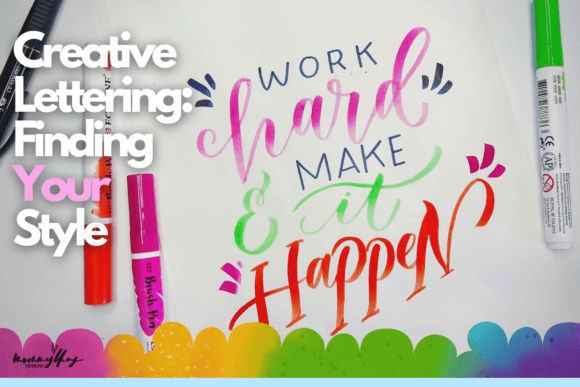
Discover Your Unique Creative Lettering Style
Creative lettering is more than just writing—it’s an art form that combines typography, design, and personal expression. Unlike standard fonts, which are pre-designed and standardized, creative lettering allows you to shape each character with your own hand, giving it a distinct personality. Whether you're a designer, artist, or hobbyist, finding your style in creative lettering can open up new ways to communicate visually and emotionally.
The process of discovering your unique approach to lettering involves experimentation, observation, and practice. It’s not about following trends but rather understanding what resonates with you and how you want to express yourself through text. This journey is deeply personal and can vary greatly depending on your background, interests, and goals.
What Makes Creative Lettering Different?
Traditional typography relies on pre-made fonts that are designed for consistency and readability. Creative lettering, on the other hand, emphasizes individuality and artistic freedom. Each stroke, curve, and angle reflects the creator’s hand, making every piece one-of-a-kind. This level of customization allows for greater emotional impact and visual storytelling.
While digital fonts are ideal for mass communication and professional settings, creative lettering offers a more intimate and expressive alternative. It’s particularly valuable in projects where uniqueness and personal touch matter, such as custom invitations, artwork, or branding elements that need a human feel.
Exploring Styles and Approaches
There are countless styles of creative lettering, each with its own characteristics and applications. Some popular options include:
- Script Lettering: Flowing, cursive-style letters that mimic handwriting. Often used in wedding stationery, logos, and personal notes.
- Block Lettering: Bold, geometric shapes that emphasize clarity and strength. Common in signage, posters, and modern designs.
- Brush Lettering: Uses brush tools to create fluid, dynamic strokes. Popular in social media graphics, illustrations, and decorative text.
- Handwritten Lettering: Mimics casual, everyday handwriting. Ideal for personal projects, journaling, and informal communication.
Each style has its own strengths and limitations. For example, script lettering may be less readable in large formats, while block lettering can appear rigid if not balanced properly. Understanding these nuances helps you choose the right approach for your needs.
Comparing Creative Lettering with Other Options
When deciding between creative lettering and other forms of typography, it’s important to consider the context and purpose of your project. Digital fonts remain the go-to choice for most commercial and technical applications due to their consistency and ease of use. However, creative lettering can offer a more engaging and memorable experience when the goal is to connect on a personal level.
For instance, if you’re designing a logo for a boutique business, a custom creative lettering piece might convey a more authentic and artisanal vibe compared to a generic font. On the other hand, if you’re creating a website or app interface, using a well-designed font ensures accessibility and uniformity across different devices and platforms.
Another consideration is time and skill. Creative lettering requires practice and patience, especially if you’re working by hand. Digital tools like graphic design software or apps can help streamline the process, but they still require a foundational understanding of letterform structure and aesthetics.
Strengths and Tradeoffs of Creative Lettering
One of the main advantages of creative lettering is its ability to add a personal touch to any project. It allows for greater flexibility in adjusting spacing, proportion, and detail, which can lead to more visually interesting compositions. Additionally, it can serve as a unique selling point for artists, designers, and small businesses looking to stand out in a crowded market.
However, there are tradeoffs to consider. Creative lettering can be time-consuming, especially when done manually. It also requires a certain level of skill and confidence in your abilities. If you’re aiming for speed or efficiency, relying on pre-designed fonts might be more practical. Furthermore, maintaining consistency across multiple pieces can be challenging without a structured approach.
When to Choose Creative Lettering
Creative lettering is ideal when you want to convey a specific mood, message, or identity that goes beyond standard typography. It works well for:
- Personal projects like journals, greeting cards, or handmade gifts.
- Branding initiatives that emphasize authenticity and craftsmanship.
- Artistic expressions such as murals, illustrations, or mixed-media work.
- Custom designs for events, weddings, or special occasions.
If your goal is to create something that feels unique and meaningful, creative lettering can be a powerful tool. It allows you to infuse your work with your own voice and perspective, making it more relatable and impactful.
When to Consider Alternatives
While creative lettering offers many benefits, it’s not always the best fit. In situations where clarity, scalability, or uniformity is essential, traditional fonts may be more appropriate. For example:
- Corporate communications, reports, or documents that require a professional appearance.
- Public signage or wayfinding systems where legibility is critical.
- Projects involving large-scale printing or digital distribution.
- Collaborative efforts where consistency across multiple contributors is necessary.
In these cases, using a well-chosen font can save time and ensure a polished outcome. It’s also worth noting that combining creative lettering with standard fonts can yield the best of both worlds—adding personality while maintaining readability.
Finding Your Path in Creative Lettering
Discovering your style in creative lettering is a process that involves trial, error, and reflection. Start by experimenting with different techniques and materials. Try sketching by hand, using digital tools, or exploring various inspirations. Pay attention to what feels natural and what challenges you.
It’s also helpful to study the work of others. Analyze how different artists and designers approach lettering, and consider what elements resonate with you. However, avoid copying—focus on understanding the principles behind their work so you can apply them in your own way.
Remember, there’s no single “right” way to do creative lettering. What matters most is that your work reflects your vision and values. Whether you lean toward bold, minimalist designs or intricate, ornate styles, your unique perspective is what makes your lettering stand out.